

Home > Health > Anxiety Relief
"I Forgot What Calm Felt Like." The Anxiety Breakthrough: A UK Doctor Uncovered After Watching Hundreds Of Women Get Worse On Medication
It's not a new drug. It's not therapy. It's the one thing your anxious brain has been running out of for years, and your GP has probably never tested for it.

Written by Dr. Marcus Petrescu

• 3 minute read

By Dr. Marcus Petrescu
• 3 min read

I'm about to wind up every GP, every NHS psychiatrist, and every pharmaceutical rep working in Britain today.
This is going to make a lot of people very, very angry.
What I'm about to expose could end the career I've spent fourteen years building.
And honestly, I don't care anymore.
Because last March, a 43-year-old primary school teacher named Helen sat in my consulting room at 8:47 in the morning and told me, with her hands shaking so badly she couldn't hold her cup of tea, "I CAN'T DO THIS ANYMORE."
She'd been on sertraline for two years. Before that, citalopram.
Before that, six months on an NHS therapy waiting list that ended with a single phone call telling her to "try mindfulness."
She'd spent £2,400 on private CBT sessions that left her feeling, in her own words, "like I was being asked to think my way out of drowning."
She'd spent another £1,800 over eighteen months on magnesium tablets from Boots, ashwagandha capsules from Holland & Barrett, CBD oil that cost £65 a bottle, and a meditation app subscription she renewed three years running and used twice.
Her chest felt like someone was sitting on it.
From the moment she opened her eyes. Every single morning. For four years.
I knew the system had failed her. So I went rogue and discovered something that changed everything.
And if you're reading this with that same knot in your stomach that's been there for months…
If you've tried the SSRIs and felt yourself go numb…
If you've taken magnesium and concluded it doesn't work…
The next five minutes could be the most important you spend this year.
My name is Dr Marcus Petrescu.
I'm a GP with fourteen years of clinical experience, the last six of them spent quietly researching the biochemistry of chronic anxiety at the Brookline Integrative Research Institute.
I trained under the NHS, I've prescribed every SSRI on the British National Formulary, and I'm telling you now: the pharmaceutical industry has been profiting from a lie for 37 years.
But first, let me tell you about the morning Helen broke me.
The Morning Everything Changed
It was a Tuesday. Helen was my fourth patient of the day.
Her notes said "anxiety, ongoing, review medication."
Five minutes allocated. Standard NHS appointment.
She sat down and burst into tears before I'd even said hello.
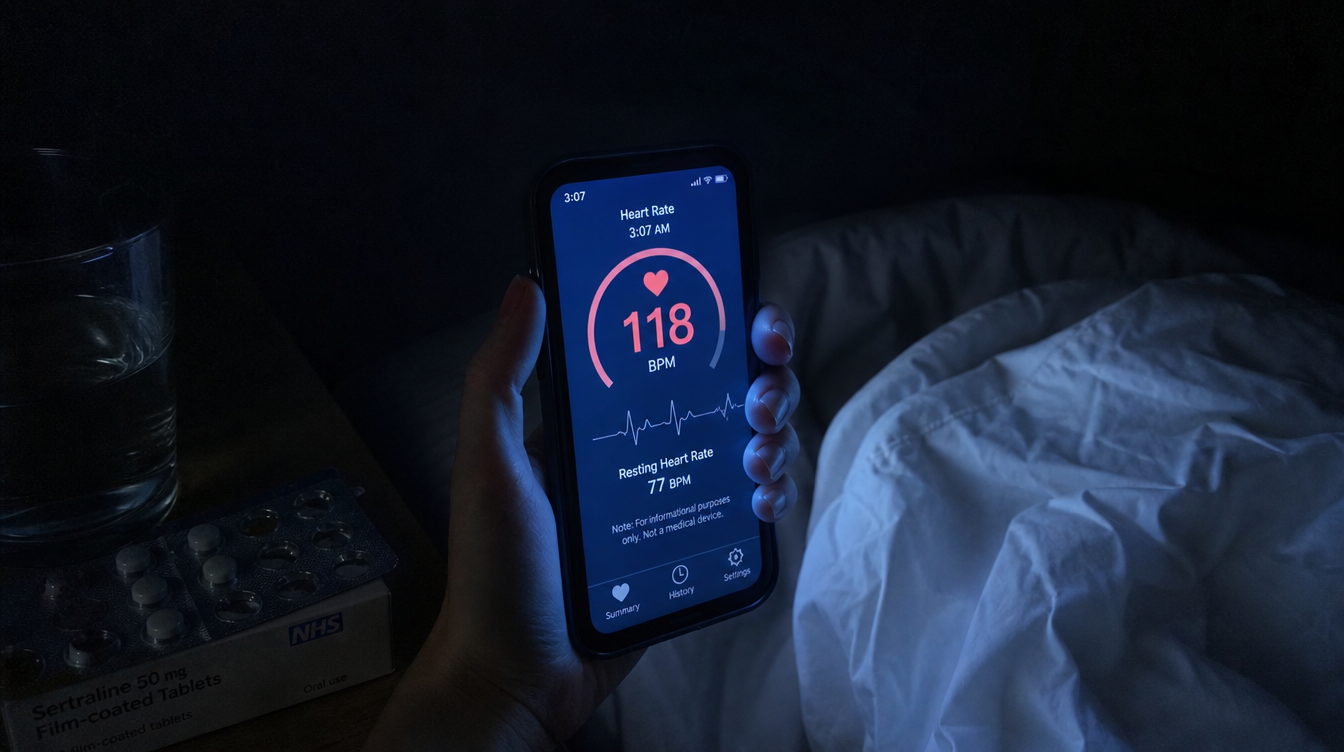
She told me she'd left her husband's bed at 3 AM because her heart was racing so hard she thought she was dying again.
She told me she hadn't been emotionally present with her two children, aged seven and ten, in eighteen months.
She told me her resting pulse, which she'd started monitoring obsessively, was 118 beats per minute at 7 AM, before coffee, while lying flat in bed.
She'd tried the lot.
Sertraline for two years, emotional blunting so severe she'd watched her own father's funeral, feeling, in her words, "like I was behind a sheet of glass."
Citalopram before that, same numbing, plus a 14-pound weight gain she couldn't shift.
Private CBT at £85 a session for nine months. £3,060 total, which taught her to "challenge her thoughts" while her body continued screaming.
A six-month NHS psychology waiting list that ended in a leaflet.
Mindfulness apps. Yoga. Hot yoga. Forest bathing in the bloody Lake District.
Pregabalin was offered, but she declined after reading withdrawal stories on Mumsnet.
"I CAN'T DO THIS ANYMORE," she said.
"I just want to feel like me again."
I sat there in my consulting room staring at her, this competent, intelligent, professionally accomplished woman who couldn't stop her hands from shaking, and something inside me snapped.
The Discovery That Broke My Faith In My Own Profession
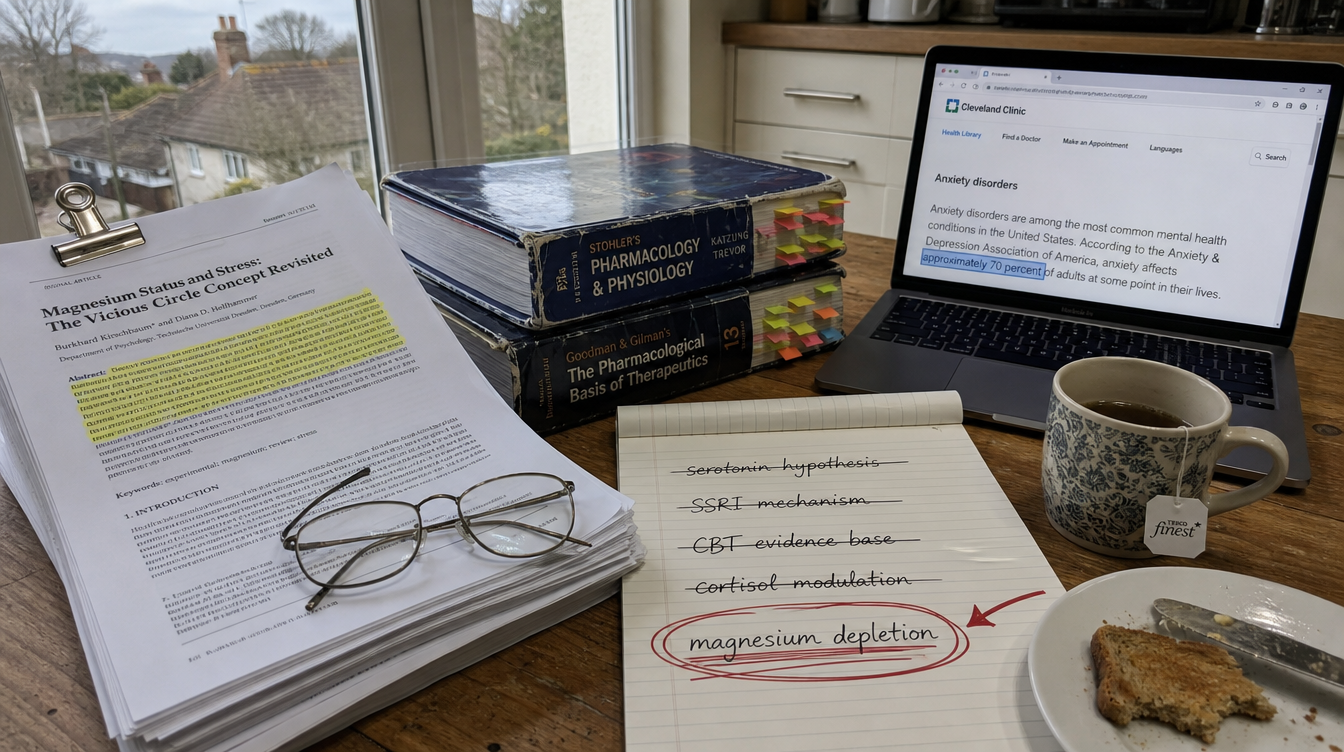
For the next four months, I lived like a man possessed.
I have read everything published on magnesium and the central nervous system since 1968.
I worked through papers from Johns Hopkins, Stanford, the Karolinska Institute in Stockholm, and a group at the Cleveland Clinic that had been quietly publishing on the magnesium-GABA axis for over a decade.
I spent £8,400 of my own money on textbooks, journal access, and a research trip to a biochemistry lab outside Zurich. My wife thought I was having some sort of midlife collapse.
What I found genuinely made me want to put my fist through my consulting-room wall. The entire NHS prescribing pathway for anxiety is built on a lie.
A £14-billion-a-year lie that keeps people like Helen sick, desperate, and reaching for the next prescription.
Here's what they don't want you to know:
chronic anxiety, in the vast majority of cases, is not a serotonin problem. It's a magnesium depletion problem.
And the surprising data point that proves it?
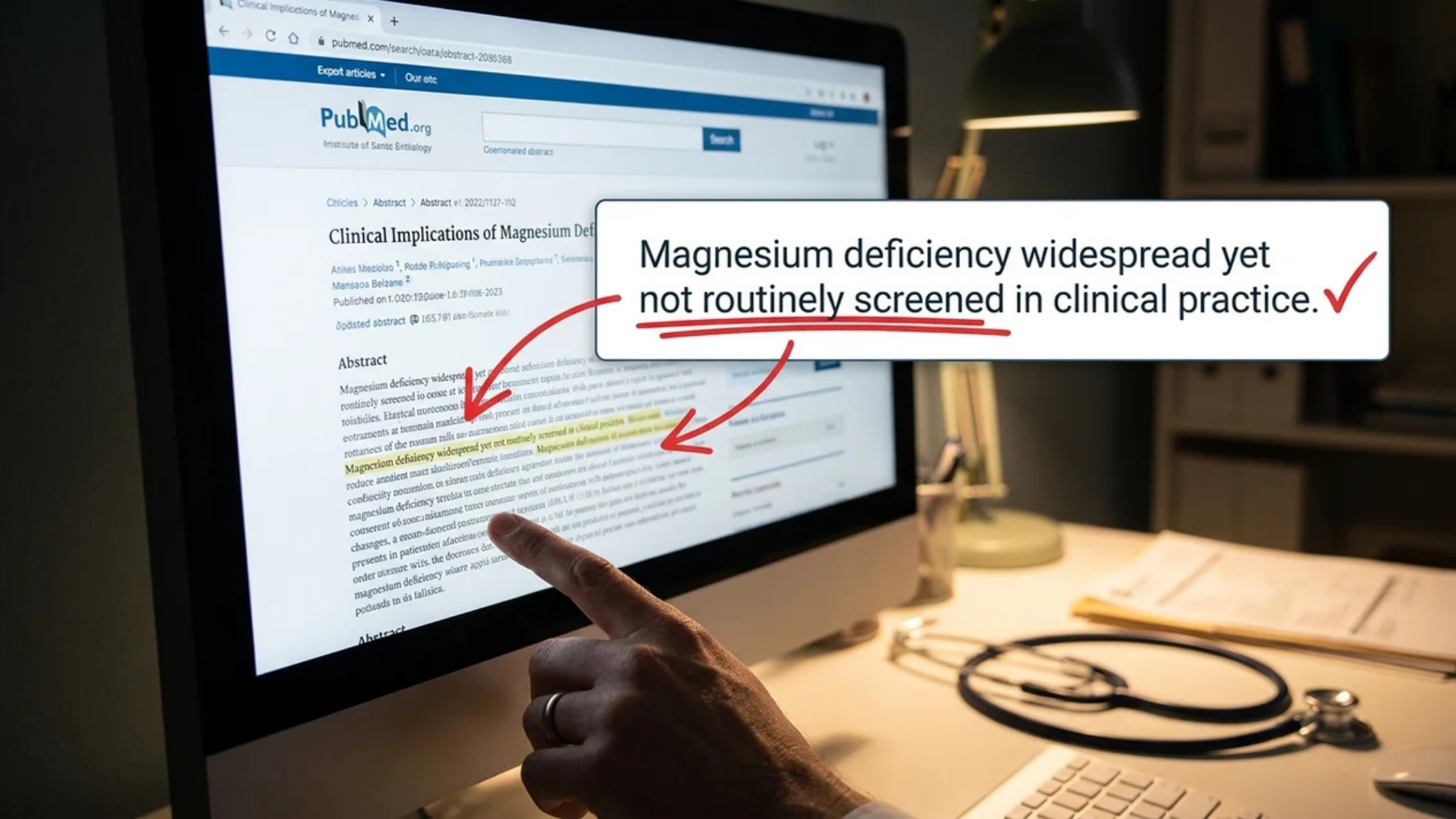
Around 70% of the Western adult population is now magnesium-deficient, yet magnesium status is not routinely tested in a single NHS surgery in Britain. Not one.
The Cleveland Clinic has acknowledged this publicly. The NIH has acknowledged this publicly.
Your GP has never mentioned it.
The Real Root Cause Of Chronic Anxiety
Picture your nervous system as a lush green vine growing along a garden wall.
Healthy, supple, responsive, it bends in the wind, but it doesn't snap.
That vine runs on a specific fuel: magnesium, bound to glycine, feeding receptors in your brain called GABA receptors.
GABA is the brain's natural braking system.
It's what tells your nervous system to stand down after a stressful meeting, a difficult conversation, or the school run from hell.
Without functioning GABA receptors, your brain cannot produce calm.
It is biochemically incapable of it.
Now, picture what happens under chronic stress.
Every cortisol spike, every deadline, every argument, every 3 AM wake-up, causes your kidneys to flush magnesium out of your body.
In 1900, the average British diet delivered around 500 milligrams of magnesium per day.
Today, thanks to intensive farming that has stripped UK soil of 30% of its mineral content and food processing that removes 80–90% of what's left, the average British adult gets just 175–225 milligrams a day.
Less than half of what your grandparents got.
So the modern British woman is being depleted from both ends. Less coming in. More going out.
The vine starts drying out. The GABA receptors stop firing properly.
The braking system fails.
This is what I now call "Cortisol-Driven Magnesium Burnout", a vicious cycle documented in the PubMed and MDPI literature since 2020. Stress depletes magnesium.
Depleted magnesium disables GABA. Disabled GABA means the nervous system stays in a fight-or-flight state. Fight-or-flight raises cortisol. Cortisol burns through more magnesium.
Round and round it goes, getting worse every month, every year, every decade, until the woman who used to be calm, capable, present, and warm wakes up one morning at 43 and doesn't recognise herself in the mirror.
That's why the anxiety feels like it's coming from your body, not your thoughts. Because it is. It's the sound of the vine snapping under the weight of its own dryness.
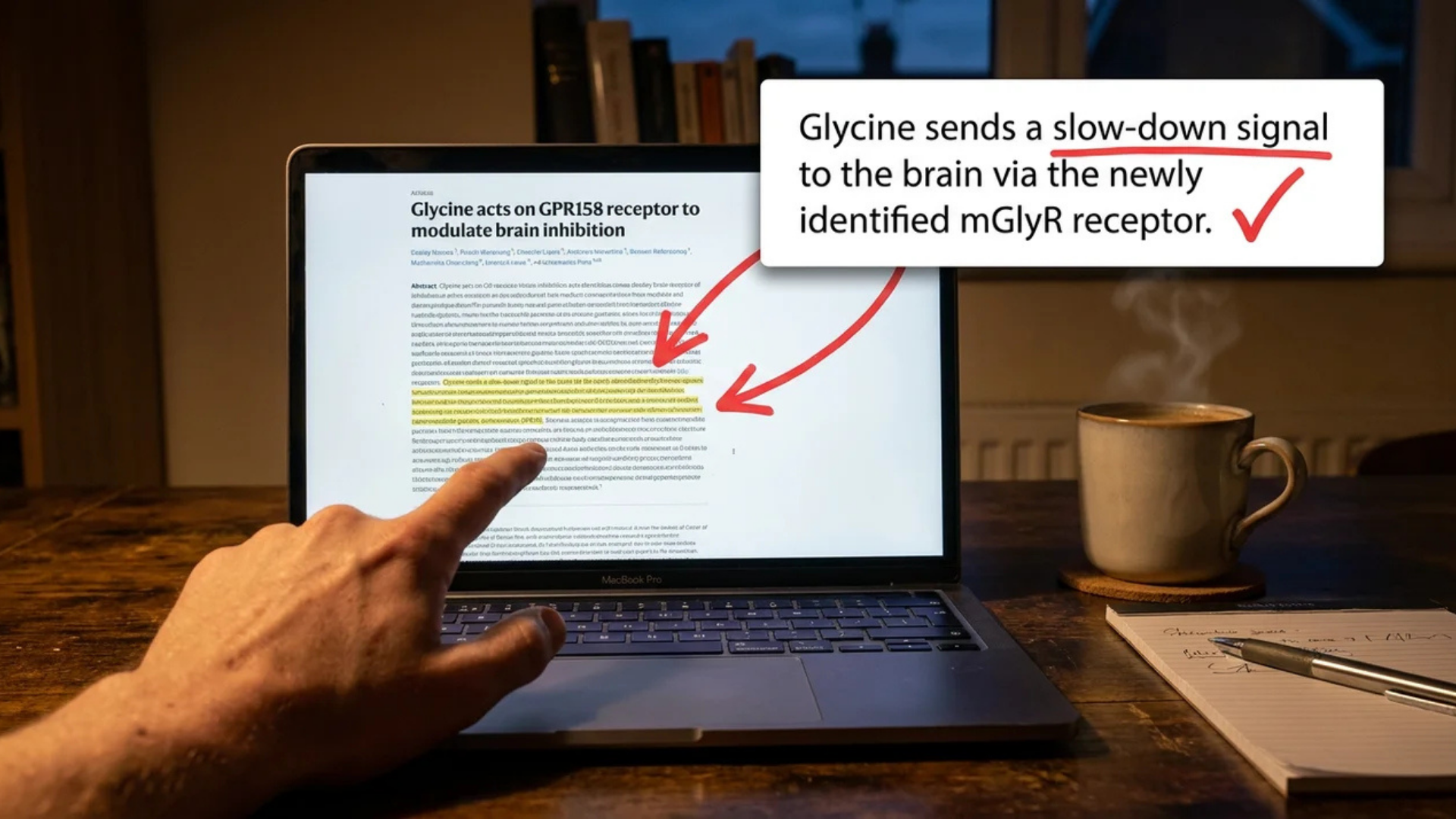
In fact, Dr Kirill Martemyanov at the Wertheim UF Scripps Institute won international scientific recognition in 2023 for discovering that glycine, the same amino acid bound to magnesium in proper supplemental form, sends a direct "slow-down" signal to the brain via a receptor called GPR158, now renamed mGlyR.
(His paper was published in Science, one of the two most prestigious scientific journals in the world.)
But here's the truth that should make every British taxpayer furious.
There is no money in fixing it.
You cannot patent magnesium.
You cannot bill the NHS £180 per appointment to prescribe a mineral.
You cannot get a pharmaceutical sales representative to take a GP out to dinner to push a supplement that costs less than a Pret sandwich.
So they keep you on the hamster wheel. SSRI → side effects → dose increase → new SSRI → CBT waiting list → mindfulness app → "have you considered pregabalin?" → repeat. It's genius, really.
If you're a sociopath who sees human suffering as a quarterly revenue stream.
The 3-Hour Breakthrough Hiding In Plain Sight

Three weeks after I started Helen on the protocol I'd built, she sent me a text message at 6:15 in the morning.
It said: "I had my coffee. Sitting in the garden. The knot is gone. I'm crying, Marcus, but it's not anxiety crying. It's relief."
She'd felt the first shift after a single dose.
By week two, her resting pulse had dropped from 118 to 92.
By week six, she was off sertraline entirely, supervised by me, with zero withdrawal because we'd replenished the underlying deficit instead of just blocking serotonin reuptake.
We used a new "Sublingual-Synergy Calming Stack" method.
By delivering three compounds together, in the exact forms the brain actually absorbs, we bypassed the absorption ceiling that makes ordinary supplements useless, and gave her nervous system the raw materials it had been starved of for fifteen years.
To Fix Chronic Anxiety, You Need Three Things At The Same Time
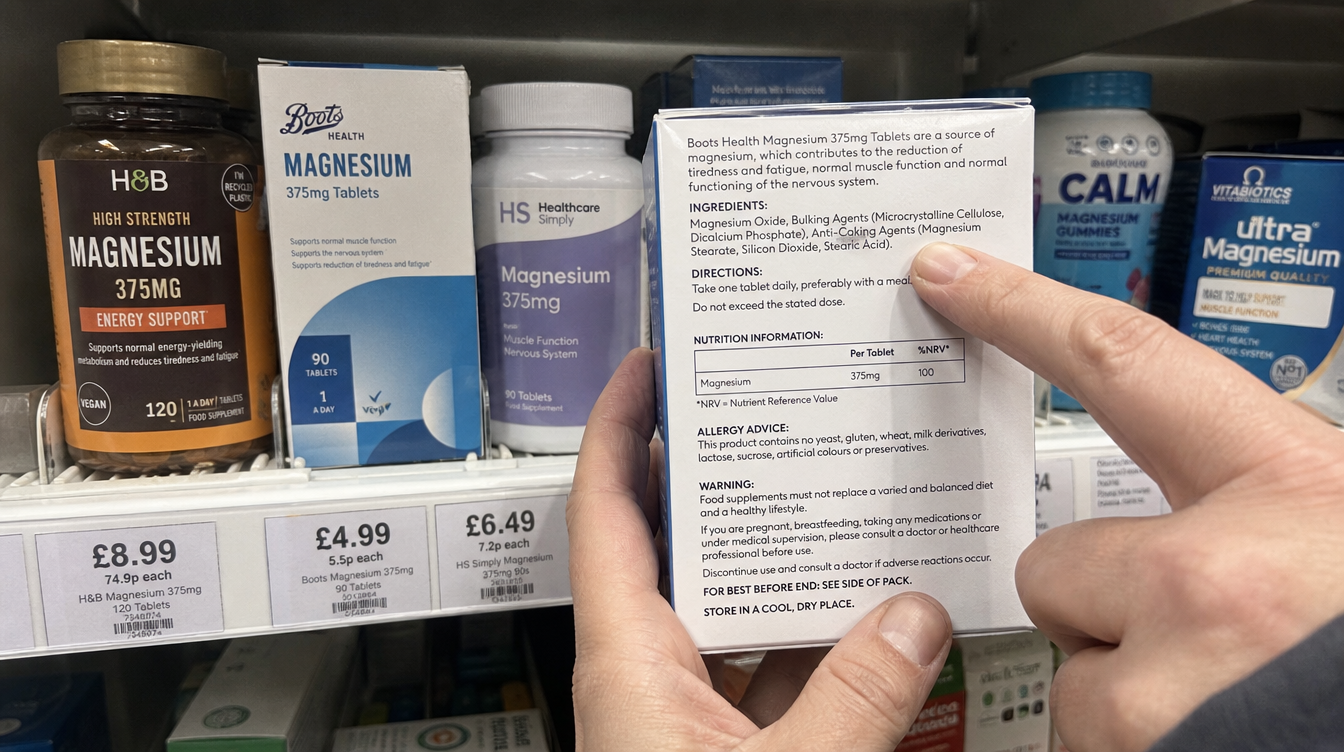
This is the part the supplement aisle at Holland & Barrett gets catastrophically wrong.
1
RESTORE GABA receptor function.
Without bioavailable magnesium, specifically magnesium glycinate, absorbed at 50–80% versus 4–15% for the magnesium oxide sold in most British pharmacies, your GABA receptors physically cannot fire. You can do all the breathing exercises you like; if the receptor is empty, nothing happens.
2
DIRECTLY CALM the nervous system.
Glycine, acting independently on the mGlyR receptor discovered at Wertheim Scripps, sends a "slow-down" signal that reduces physical tension, the clenched jaw, the tight chest, and the shoulders pulled up to your ears. Without it, the muscular component of anxiety never releases.
3
REDUCE excitatory glutamate and increase alpha brain waves.
L-theanine, the calming amino acid found in green tea, crosses the blood-brain barrier in around 30 minutes, suppresses the excitatory neurotransmitter glutamate, and shifts your brainwaves into the "alert calm" alpha state. Without it, even with magnesium and glycine on board, the racing thoughts persist.
Miss even ONE of these three, and you're wasting your time.
That's why sertraline doesn't work for so many women; it modulates serotonin, a wrong neurotransmitter entirely.
That's why ashwagandha disappoints; it touches cortisol but never reaches GABA.
That's why cheap supermarket magnesium gives you the runs and nothing else, 4% absorption means a 400mg tablet delivers maybe 16mg of usable mineral.
You need all three. At the same time. In the right forms.
A Triple-Action Calming Stack.
And that's exactly what this formula delivers.
When You Mess With A £14-Billion Industry, They Come For You
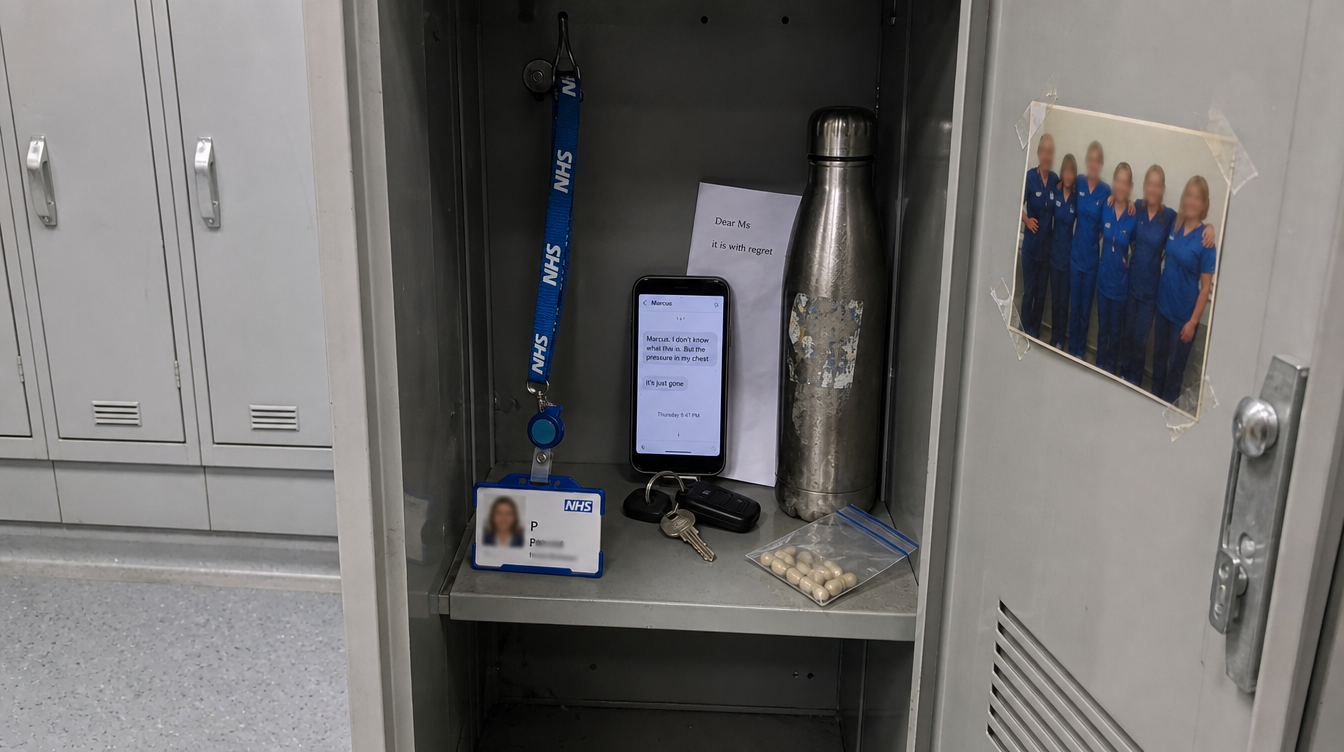
A 41-year-old NHS A&E nurse, Priya, was the second patient I tried it on.
Priya had been having panic attacks during her shifts for nine months.
She'd hidden them from her colleagues. She'd been signed off twice.
She was three weeks away from handing in her resignation and walking away from a sixteen-year career she loved. The occupational health doctor had offered her diazepam.
She'd refused.
"I've watched too many patients come through resus because of that stuff," she told me.
I gave her the protocol on a Thursday evening. Just under three hours later, she sent me a text from her sofa:
"Marcus. I don't know what this is. But the pressure in my chest, the one that's been there since last June, it's just… gone."
She slept through the night, unmedicated, for the first time in seven months.
Two weeks later, she went back to her A&E shifts. She's still there.
After I shared a write-up of these cases at a small regional GP conference last autumn, things got interesting.
First came the "friendly" emails from senior colleagues suggesting I "reconsider the framing."
Then came a letter from a London law firm representing a pharmaceutical company I will not name, "respectfully reminding" me of the General Medical Council's stance on alternative therapies.
Then two pharmaceutical reps I'd known for years suddenly stopped returning my calls.
They wanted me gone because I'd written up something that could make their entire NHS prescribing pipeline look like the bloated, profit-driven racket it is.
A Simple Sublingual Stack That:
✅ Fixed the root cause of chronic anxiety (not just masked it)
✅ Worked in under 3 hours (not 4–6 weeks like sertraline)
✅ Costs less than a single private therapy session
✅ Let women heal themselves at home (not in a 10-minute GP appointment)
But here's what those pharmaceutical vultures didn't count on.
While I was being quietly squeezed out of the conference circuit, I'd already come across a small team of biochemists working out of a research facility outside Manchester who'd been quietly building exactly this formula for four years.
People who'd watched their own mothers, wives, and sisters suffer through the same broken NHS pathway.
And they'd turned the clinical mechanism I was researching into something any woman in Britain could access from her sofa.
The Brand I Now Send All My Patients To
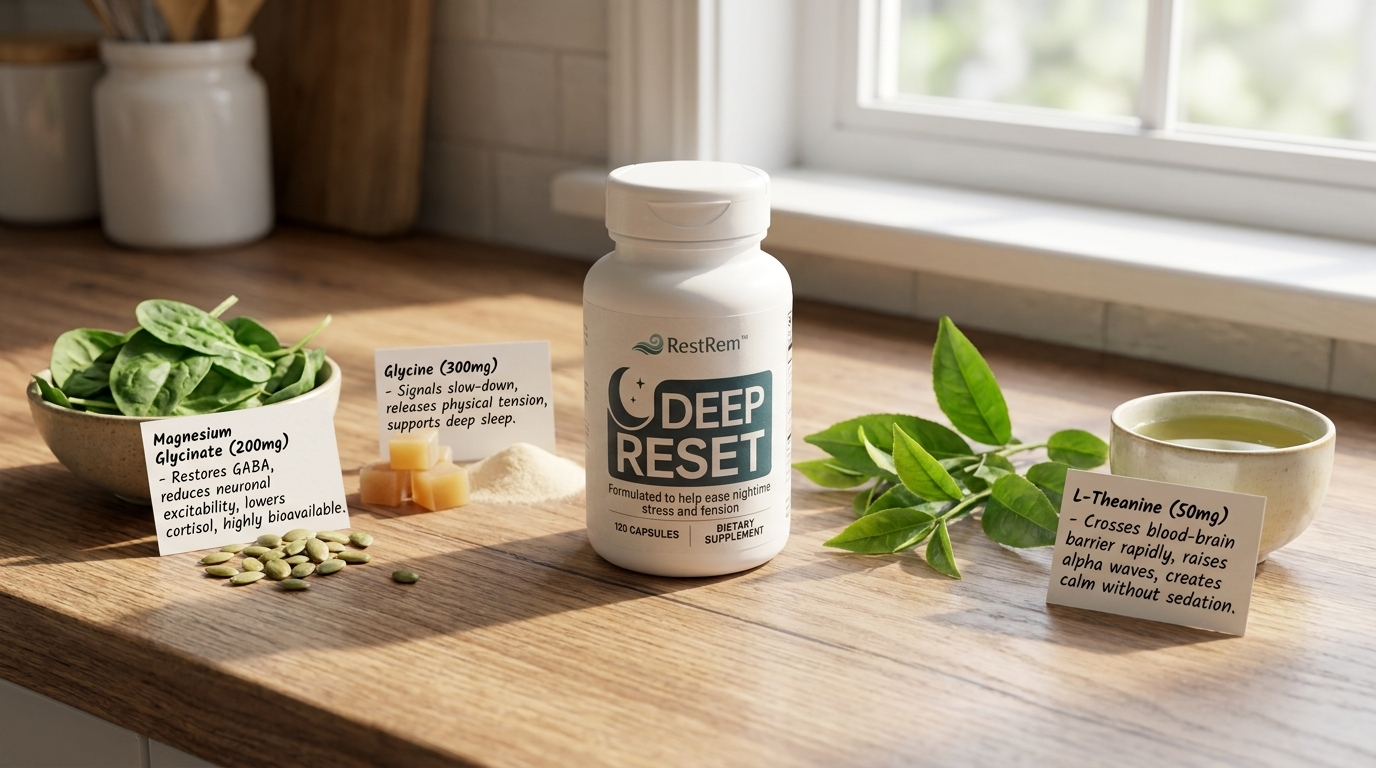
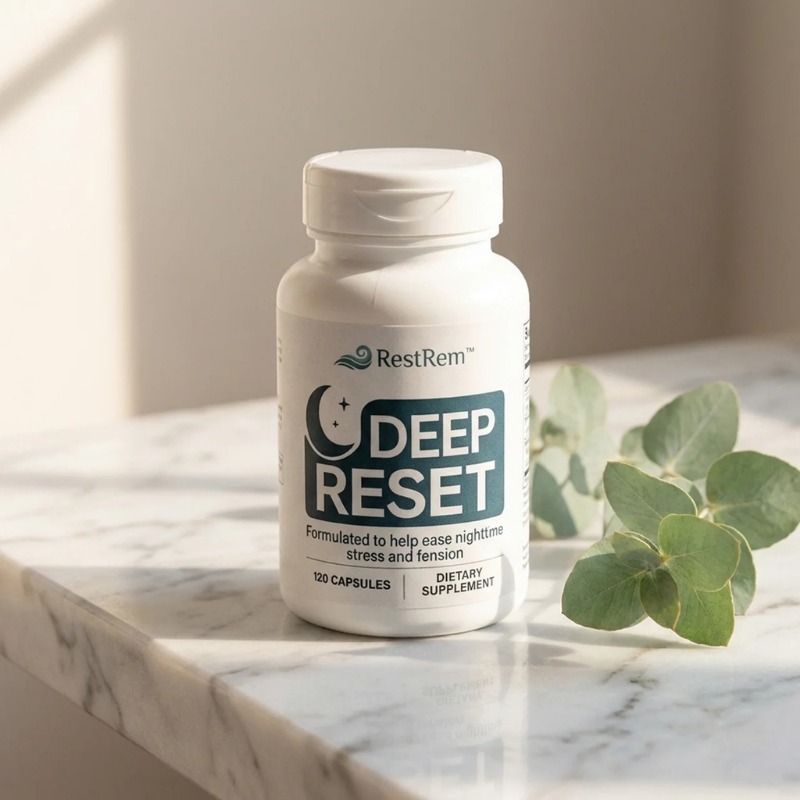
It's called RestRem™.
I didn't make it. A small team of biochemists working out of a third-party-tested facility outside Manchester did. They've been quietly developing this formula for four years before I ever heard of them.
When I finally got hold of their product and tried it on Priya, I knew.
Because RestRem™ is the only sublingual-tier formula on the British market that delivers all three requirements for lasting calm:
Magnesium Glycinate (200mg)
Restores GABA receptor function, reduces neuronal excitability, and modulates the HPA axis to bring cortisol down. Absorbed as an intact dipeptide via intestinal peptide transporters, 50–80% bioavailable.

Glycine (300mg)
Sends a direct "slow-down" signal via the mGlyR receptor, releases physical tension, and supports deep sleep architecture.

L-Theanine (50mg)
Crosses the blood-brain barrier in 30 minutes, raises alpha brain waves, suppresses glutamate, and creates calm without sedation.

All three. Working together. In one capsule.
You take one in the morning. That's it. And let the biochemistry do the work.
No GP appointments. No NHS waiting lists. No private therapy invoices.
Just your nervous system finally getting what it's been desperately starved of:
Calm. Clarity. Yourself.
What I Learned About This Company Before I'd Send My Patients Their Way
Now, let me tell you what I learned about this company before I'd put my name anywhere near them.
Because I don't lend my name to supplements. Ever.
I rang the founder. Asked him uncomfortable questions.
Wanted to see the lab certifications.
Wanted to know who their formulator was.
Wanted to know why their refund rate sat below 0.1%.
Here's What I Learned:

Manufactured in a GMP-certified, MHRA-registered facility in the United Kingdom, third-party tested for purity and potency by an ISO 17025-accredited lab

Their formulator is a PhD biochemist with 11 years at a top-five British pharmaceutical company before walking out in disgust.

Magnesium sourced from a single supplier in Bavaria, no Chinese bulk powder, no fillers, no stearates.
Customer service answers within two rings, refunds processed within 48 hours, all from a small team based in Sheffield
Already has over 44,000 verified British customers with a near-spotless complaint record at Trading Standards
Look, I've spent fourteen years watching supplement companies cut corners and charge a fortune for it. These people don't.
That's why I'm willing to put my name next to theirs.
Here Is Exactly How Restrem™ Calms Your Nervous System In Under 3 Hours
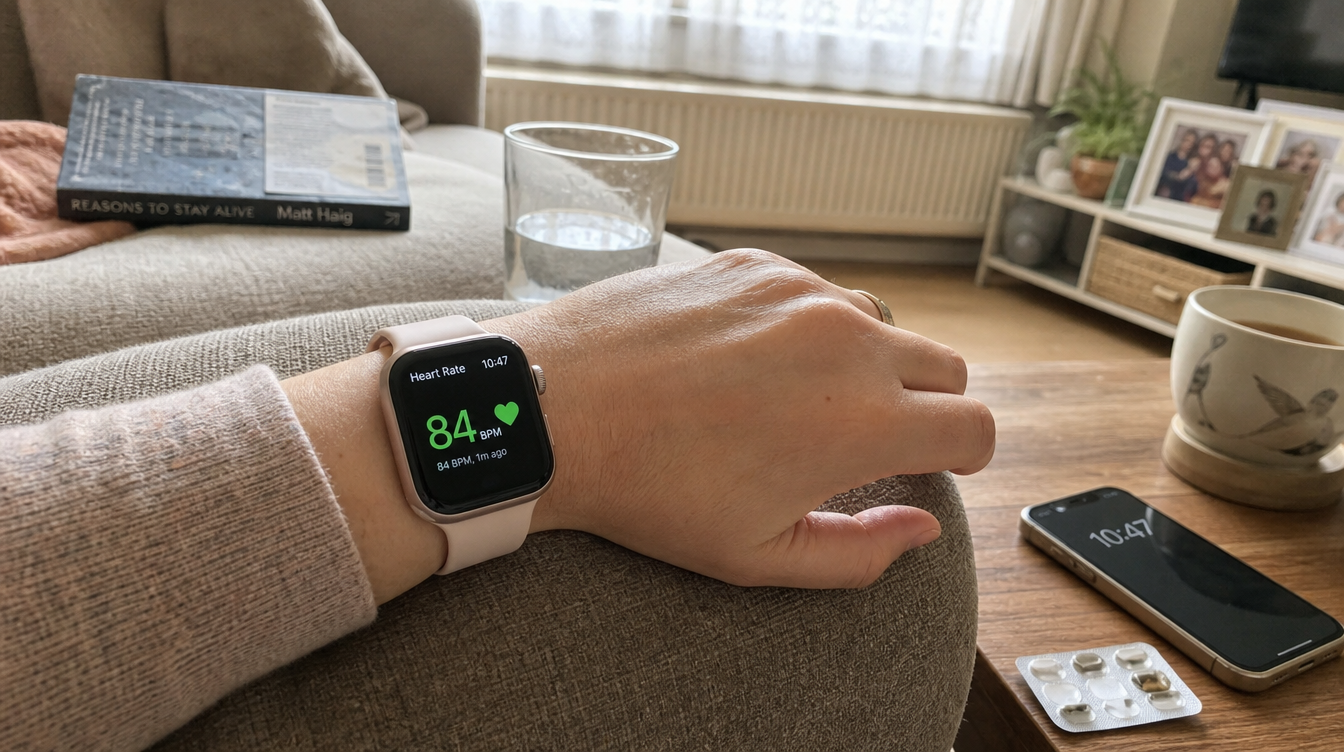
When you take RestRem™ in the morning, here is what happens inside your body.
Minutes 0–30: The Refuel phase.
L-theanine crosses the blood-brain barrier first.
Within twenty minutes, you start to notice something subtle but real: the chest loosens half a notch.
The racing thoughts slow from a sprint to a fast walk.
Most women describe it as "the volume coming down a touch."
That's not in your head.
That's alpha brain waves rising and glutamate dropping in real time.
Hours 1–2: The Restore phase.
Magnesium glycinate hits peak plasma concentration.
Your GABA receptors, empty for months, possibly years, start firing properly for the first time in a long time. The jaw unclenches. The shoulders drop.
The knot in your stomach softens.
Many women I've put on this notice have taken their first deep breath of the day.
Hours 2–3: The Calm phase.
Glycine reaches the mGlyR receptor.
The "slow-down" signal travels through the nervous system.
Resting pulse drops.
Physical tension releases from chronic holding patterns.
The internal vibration, the one that's been there since you can't remember when, quiets.
After three hours? You stand up from your chair feeling like someone has handed you back the nervous system you had in your twenties.
Not numbed like sertraline. Not sedated like diazepam. Actually. Calm.
What Over 44,000 British Women Have Experienced In The Past 18 Months
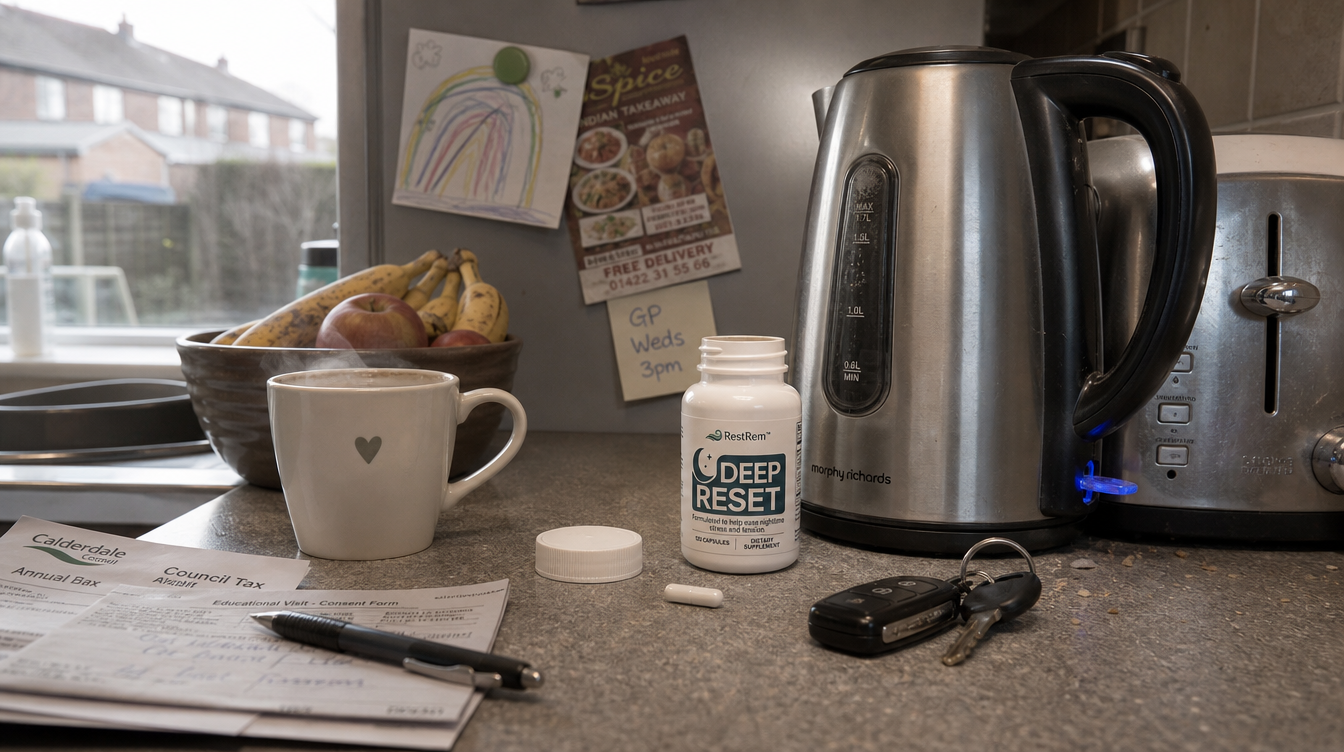
In the last 18 months, over 44,000 women across the UK have used RestRem™ for chronic anxiety.
I asked the team to show me their internal data before I wrote a word about them.
Here's what they sent over:
Over 95% report a noticeable shift in calm within the first three days
Most have reduced or eliminated their reliance on other supplements and sleep aids
Many have, in consultation with their GP, safely tapered off SSRIs they'd been on for years
But the figure that sold me? Their refund rate is 0.1%.
That's 1 in a thousand.
And one of those, I was told, was because the buyer's golden retriever knocked the bottle off the kitchen counter and ate the lot. (The dog was fine.)
Don't Take My Word For It, Here's What Real Women Have Said About Their Experience:


Verified Purchase
I'd given up. Two years on sertraline, before that citalopram, private CBT that cost me thousands. The morning after my first dose I sat in the garden with my coffee and realised the knot in my stomach had gone. I cried not anxiety crying, the other kind. Three weeks in I went to my son's football match and actually watched it instead of counting the minutes until I could go home.

Verified Purchase
I'm an A&E nurse. I was three weeks from quitting a job I love. The pressure in my chest had been there for nine months. Three hours after my first dose it lifted and hasn't come back. I'm still on my ward.

Verified Purchase
'd been told by two GPs that this was just 'who I was now.' It isn't. I sleep through the night for the first time since my forties started. My husband told me last week I 'sound like myself again.' I burst into tears at the kitchen table.
What Chronic Anxiety Really Costs In Britain
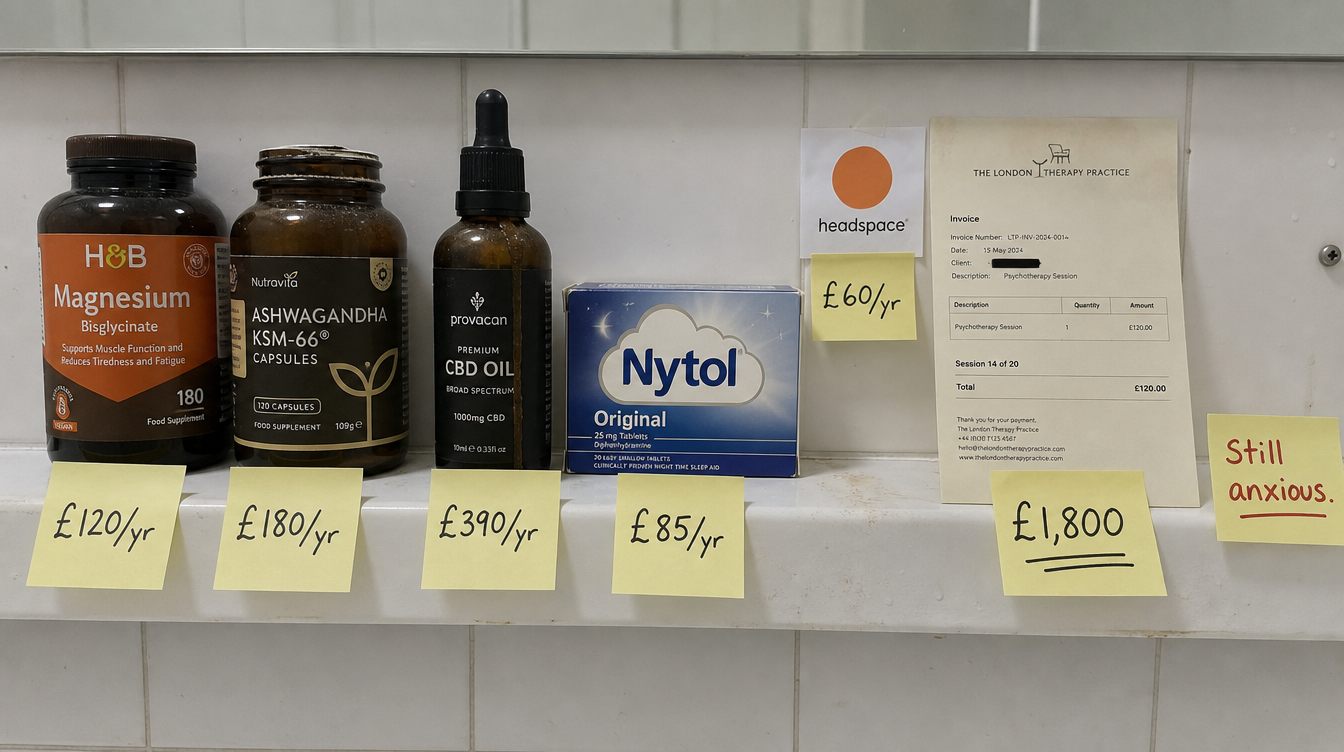
Let me show you what fixing chronic anxiety properly really costs in the UK.
The Private Therapy Route:
BACP-registered CBT therapist: £75–£120 per session
Recommended course: 12–20 sessions
Total: £900 – £2,400
Plus travel, plus time off work, plus the homework that doesn't reach your nervous system
The Private Psychiatry Route:
Initial consultation: £350–£500
Follow-ups: £180–£280 each, every 6–8 weeks
Annual cost: £1,200 – £2,000
Plus prescription costs, plus the side-effect lottery
The "I'll Just Manage It" Route:
Supermarket magnesium that doesn't absorb: £120/year
Ashwagandha cycles: £180/year
CBD oil at £65 a bottle: £390/year
Meditation app subscriptions: £60/year
Sleep aids and herbal teas: £140/year
Annual total: £890 — and you still feel exactly the same
The pharmaceutical and private wellness industries love these options. You know why? Because you keep coming back.
Failed therapy course = next therapy course.
Sertraline side effects = new SSRI.
Temporary herbal calm = lifetime customer.
It's a goldmine built on the exhaustion of British women.
But here's what really winds them up.
The Price The Founder Agreed To Give My Readers
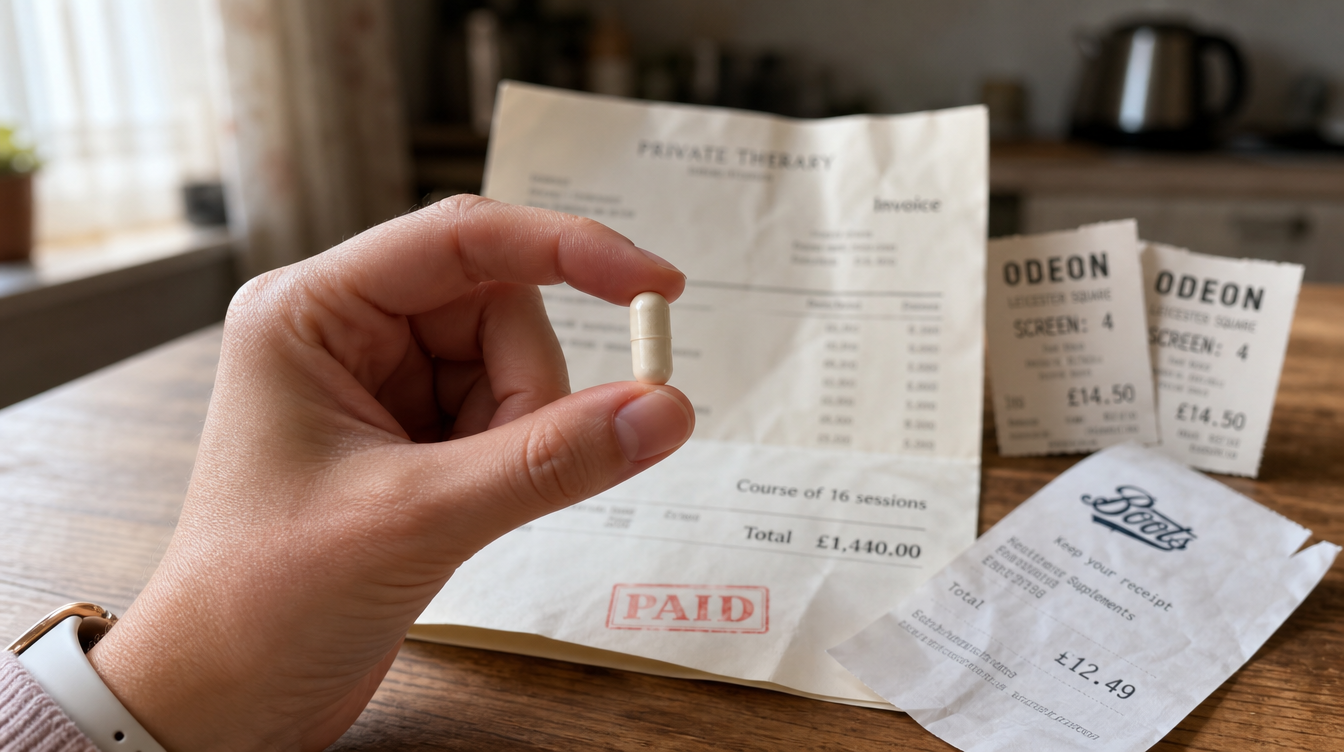
RestRem™ should cost what comparable medical-grade calming stacks sell for in private clinics, roughly the price of two private CBT sessions per bottle, which, given the formulation, sourcing, and third-party testing that goes into it, is honestly a fair retail price.
But I didn't get involved with this company to send my readers to "fair retail."
So I rang the founder. I told him:
"My readers are women like Helen. Like Priya. They've already spent thousands on therapy and pills that didn't work. If you want me to put my name next to your product, you'll discount it for them. Hard."
He pushed back. I pushed harder. We went back and forth for a week.
Eventually, he agreed to give my readers a price you cannot get anywhere else, but only through this page, and only for a limited window.
His CFO was, I'm told, livid. Good.
I'm not going to tell you the exact figure here.
The brand has asked me to keep the discounted price off public-facing pages; they don't want Boots and the big high-street wellness retailers to screenshot it and demand the same wholesale terms.
You'll see the actual number on the next page when you click below.
But I will tell you this: it works out to a fraction of what you'd spend on a single private therapy session. Less than a weekly Tesco shop.
Less than two cinema tickets in central London.
For the only sublingual-tier calming stack on the British market that actually addresses the root cause.
The Deal I Negotiated For My Readers Expires At Midnight

When the founder gave me the green light to run this discount for my readers, his one condition was this: 24 hours.
Not 72 hours. Not a week. One day.
Why? Because he doesn't want this price sitting on the internet for any longer.
As soon as the bigger British wellness retailers see what he's letting my readers pay, they'll demand the same wholesale terms, and his entire pricing structure collapses.
So, the deal is: the discount is live for 24 hours.
After midnight tonight, the page closes and the price returns to standard retail. I asked him to extend it. He said no. I asked again. Still no.
So if you're reading this, you have until midnight.
This discount expires tonight at midnight. After that, the page closes, and the price snaps back to standard retail.
And inventory is moving fast; they've sold out three times in the past six months, and the next batch isn't due back in the warehouse for another seven weeks.
The Brand's 90-Day "Calm Or It's Free" Guarantee
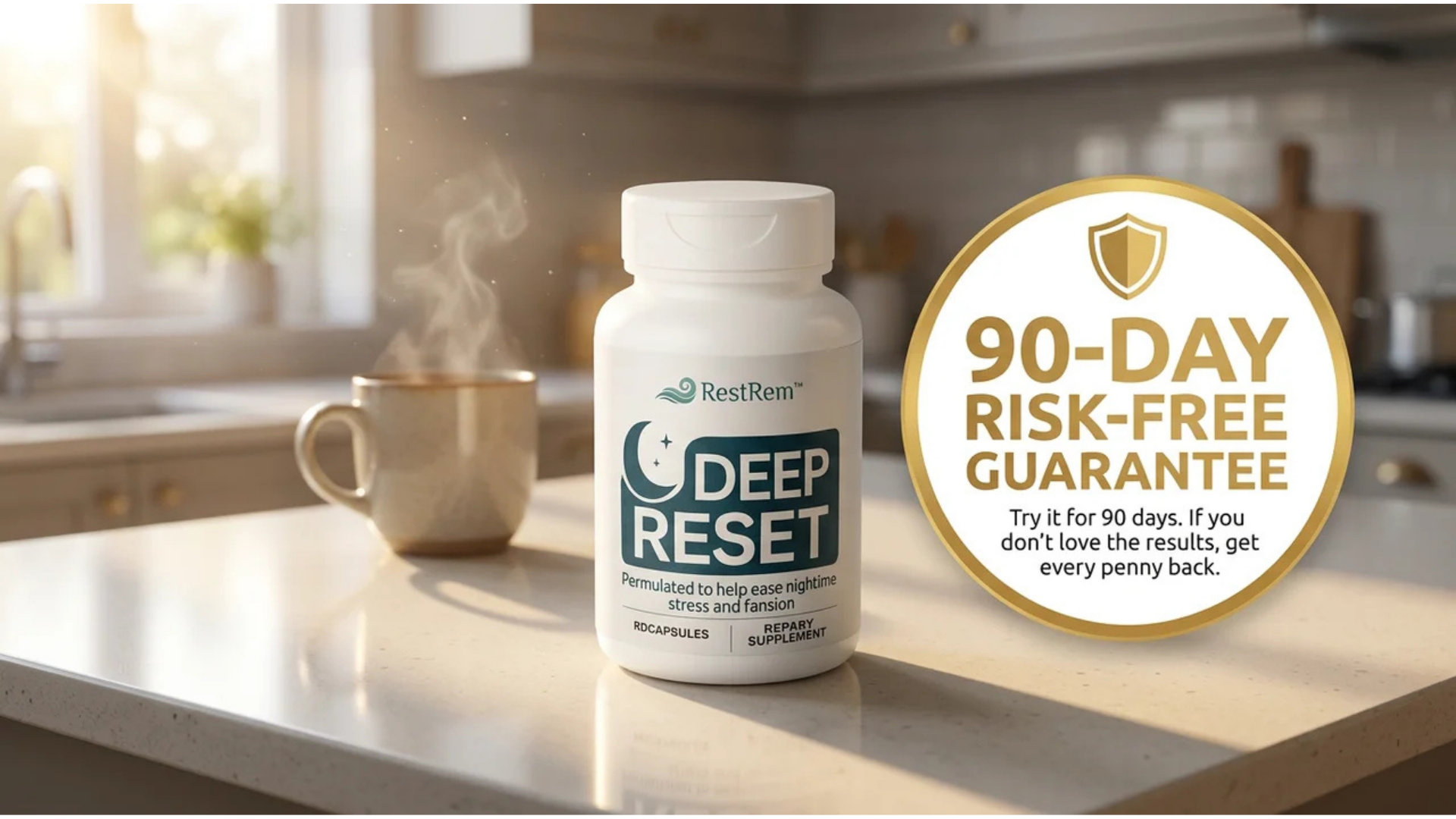
Look, I get it. You've been burned before. You've spent money on supplements that promised the earth and delivered nothing. You've been told by influencers on Instagram that this powder or that gummy would change your life, and it didn't.
So here's what the company offers — and why I trust them.
Try RestRem™ for a full 90 days. That's three full months. Long enough to put it through every kind of bad week — a deadline week, a school holiday week, a period week, a Christmas week.
Long enough to ride it through weather changes, stress changes, hormone changes, life changes.
Long enough that there is no "I didn't give it enough time" excuse anywhere.
Take one capsule every morning. Feel your nervous system come back online. Feel the chest loosen. Feel the racing thoughts slow. Feel yourself return.
And if you don't wake up one morning thinking "Hang on… I forgot I even had anxiety today" — they will refund every penny.
No forms to fill in. No store credit nonsense. No questions asked.
Just email their support team in Sheffield with the words "It didn't work for me" and the refund hits your account within 48 hours.
I asked the founder why they offer 90 days when most British supplement companies offer 30. His answer: "We want every customer to have enough time to actually feel it work. If we can't deliver in 90 days, we don't deserve their money."
That's the kind of company I'm willing to send my patients to.
Their refund rate is 0.27%. The formula works. Period.
You Are At A Crossroads
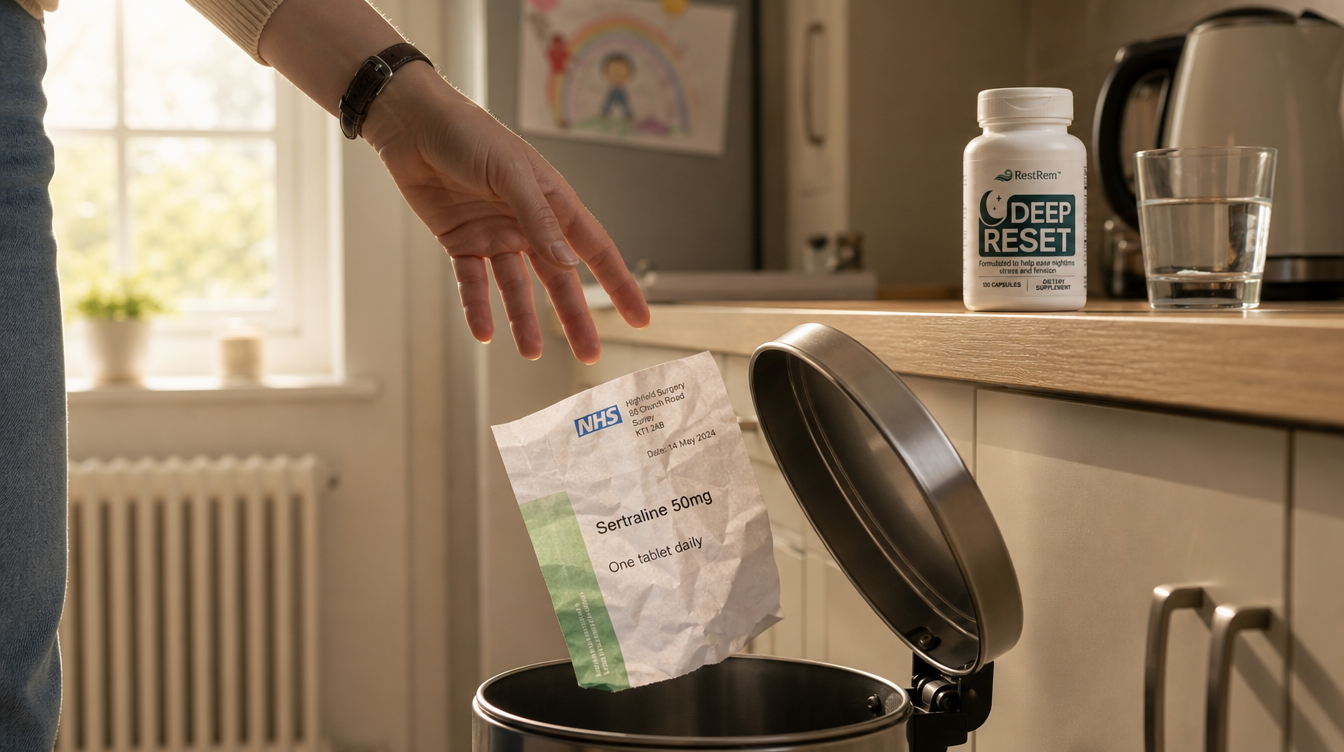
Right now, you are standing at a crossroads.
Path One: Keep doing what you're doing.
Keep waking up with the knot in your stomach.
Keep dragging yourself through another year on sertraline.
Keep counting down the minutes until bedtime.
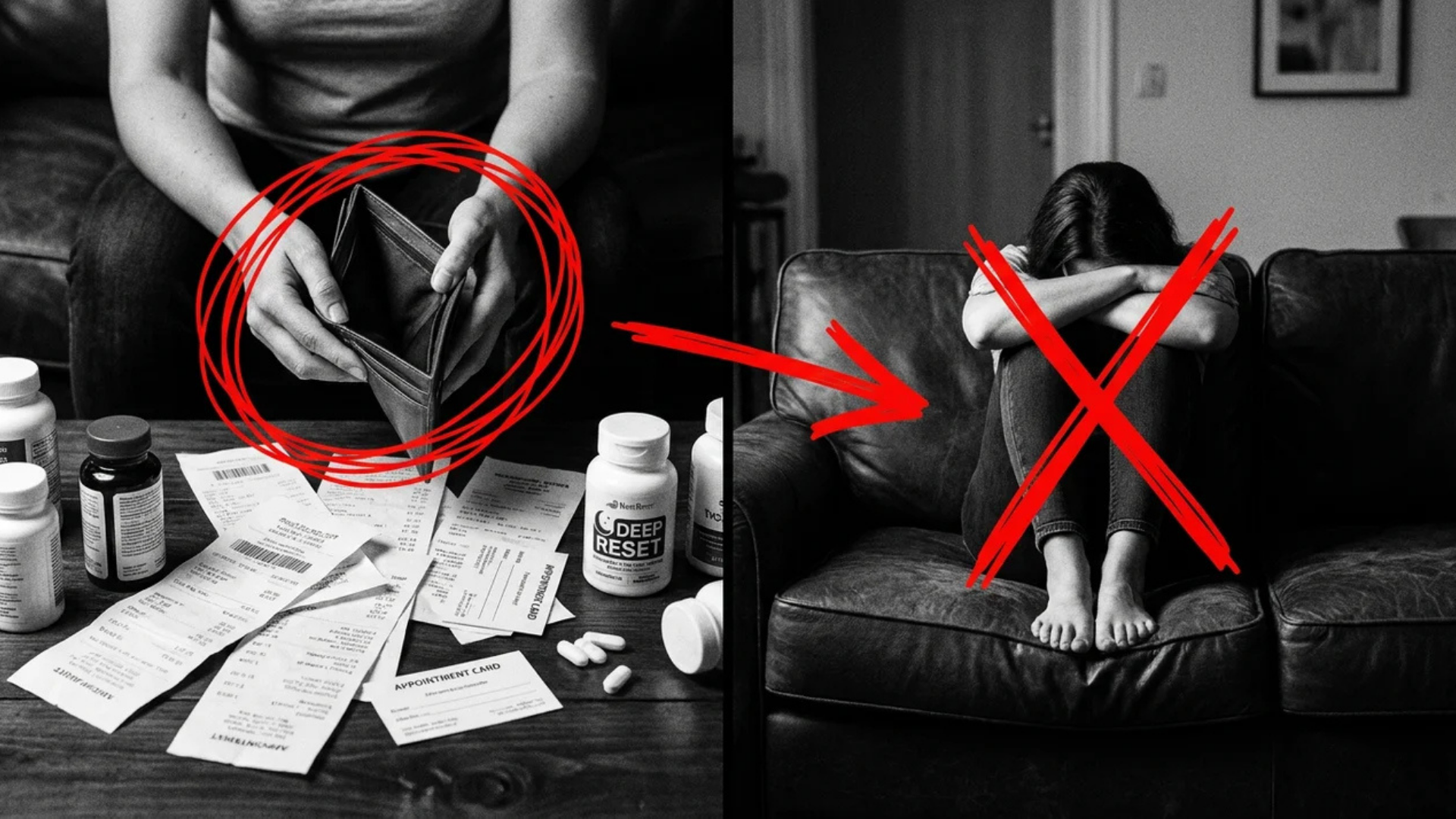
Keep paying £85 a session for CBT that asks you to think your way out of a biochemical problem.
Keep being a paying customer for an industry that profits from your suffering.
Path Two: Try something that actually fixes the root cause.
Spend less than you'd blow on a Friday-night takeaway.
Get a formula that has helped over 44,000 British women reclaim their nervous systems.
Fix the depletion that's been quietly destroying you for a decade.
Wake up tomorrow with hope instead of dread.
The choice seems fairly obvious from where I'm sitting.
Because let's be honest, chronic anxiety doesn't get better on its own.
Left unaddressed, the magnesium deficit deepens, the GABA dysfunction worsens, the cortisol stays elevated, and the woman you used to be drifts further away every year.
Either keep wasting time and money on solutions that don't reach the right layer, or watch the next decade go the same way as the last. Or.
You can make the sensible decision to try RestRem™ and at least give yourself a real chance to turn this around over the coming weeks.
Remember, you've got absolutely nothing to lose.
Either it works as I've described, or you get every penny back.
Either way, it's better than giving up and doing nothing.
Here Is Exactly What To Do Next
Click the button below that says "CHECK AVAILABILITY"
Choose your package (quick tip: get at least 2–3 bottles. You'll want backups when this works. Plus you'll save more.)
Fill out your shipping details (they ship same-day if you order before 3 PM)
Wait for your package to arrive (usually 3–5 working days anywhere in the UK)
Take your first capsule the morning it arrives
Email the team your success story in a week's time
But whatever you do — don't close this page thinking "I'll come back to it later."
Later doesn't exist when you're lying awake at 3 AM with your heart racing.
Later is another wasted week, another bad school run, another evening where you can't be present with your children.
Later is the discount expiring at midnight.
Your nervous system has waited long enough. Click below and let's end this.
With hope, Dr. Marcus Petrescu Brookline Integrative Research Institute
P.S. Helen just sent me a photo last weekend. She's standing on a footpath in the Yorkshire Dales with her two children, all three of them grinning, her husband behind the camera. The caption read: "Marcus — three weeks ago I couldn't have done this without a Diazepam in my pocket. Today I didn't even need to think about it." That could be you in 90 days. But only if you act now — the discount window the brand gave my readers closes at midnight tonight.
P.P.S. I've now put over 240 of my own patients on RestRem™. I don't get a kickback. I don't have equity in this company. I'm not on their payroll. I just got tired of watching the British healthcare system fail women like Helen and Priya — and this is the only formula I've found that actually does what it claims. The science is real. The company is real. The results are real.
P.P.P.S. Seriously — the brand's discount window closes at midnight tonight. Tomorrow this page will show standard retail pricing, and there is no "I missed it" workaround. I asked. They said no. Don't say I didn't warn you.
Trending
Limited Discount Today Only!

4.9 out of 5
4,514 verified ratings
This offer is only available on this page — not on Amazon, not on eBay, not anywhere else.
We can only make this offer because we sell directly to customers. No middlemen. No markup.

90-Day Risk-Free Money-Back Guarantee
Use it for 90 days. If you don’t get results, you get all your money back. No questions asked.
We’ve seen this work for thousands of people. Order now before your discount expires.
Trending
RestRem™
✓ No more morning dread
✓ Finally feel like yourself
✓ No SSRIs or prescriptions
✓ Naturally calming formula
✓ Felt within 3 hours
✓ 90-day money-back guarantee


















Clara Milton
I absolutely love mine, had to get one for my daughter today since she won't stop using mine
Like · Reply · 2 · 5 h

Kate Orson
OMG I know, I was so happy that they had some left today. Had to get one immediately before they run out of stock again like last time
Like · Reply · 5 · 2 h

Isabella Mayson
Thank you, mine arrived today! Will test it tonight.
Like · Reply · 3 · 5 h
MEDICAL & HEALTH DISCLAIMER: The information and other content provided in this page, or in any linked materials, are not intended and should not be construed as medical advice, nor is the information a substitute for professional medical expertise or treatment.
If you or any other person has a medical concern, you should consult with your health care provider or seek other professional medical treatment. Never disregard professional medical advice or delay in seeking it because of something that have read on this page or in any linked materials. If you think you may have a medical emergency, call your doctor or emergency services immediately.
© 2026 All Rights Reserved. Privacy Policy - Terms of Service - Returns and Refunds